 Products
Standard · Conference essentials
Plan around arrival, information and main-hall participation.
- Identity, groups, seats and NFC check-in
- Agendas, notices, button voting and quizzes
- Prize prompts, collection verification and agreed records
AI SUPER BADGE
One badge. A shared event experience.
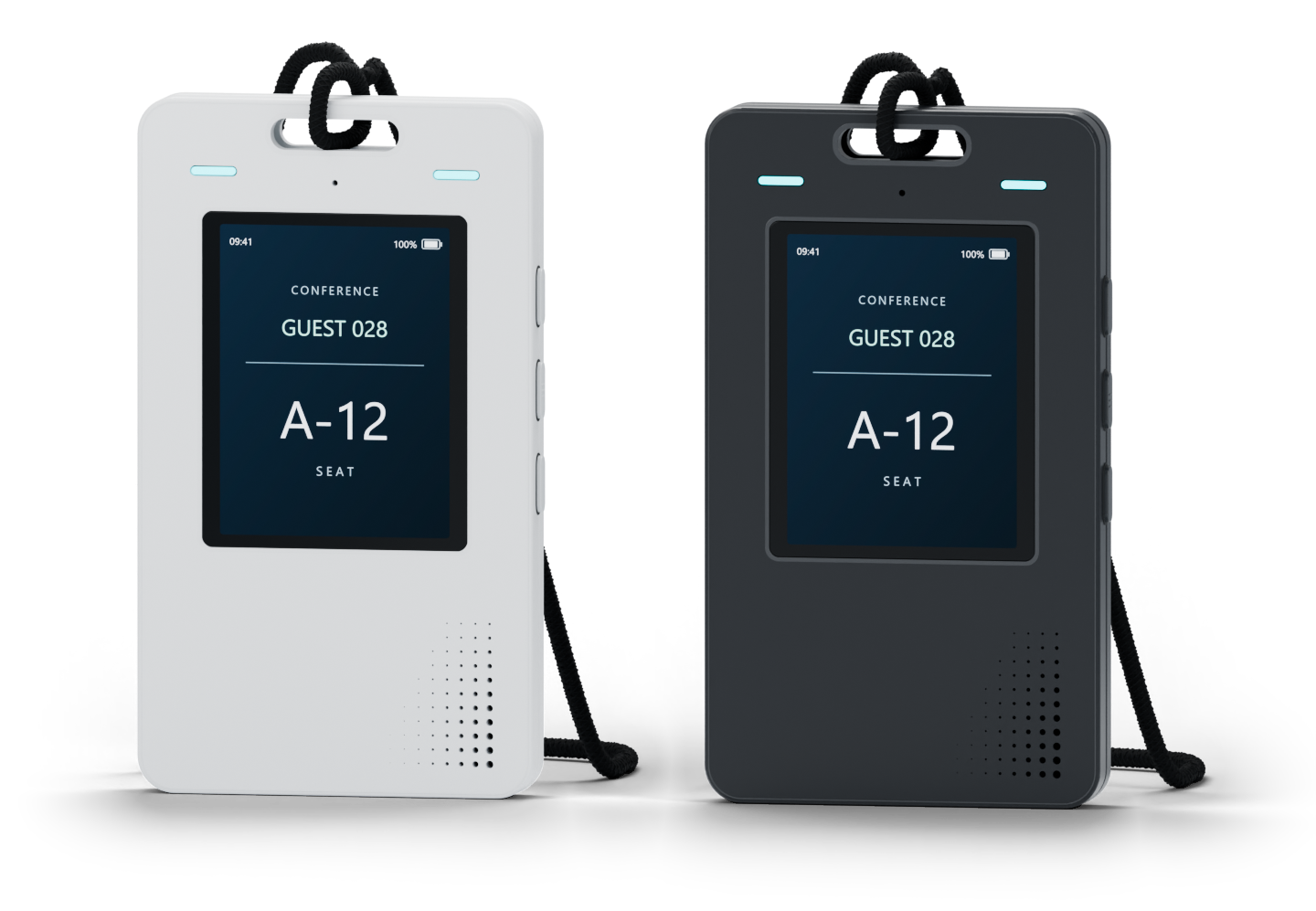
Put identity, agendas and interaction within every guest’s reach. From check-in and button voting to exhibition stamps, the badge works with terminals, a control system and event screens throughout the experience.
Choose a moment to see the badge in use. These are illustrative function demos; the enabled scope is confirmed per project.
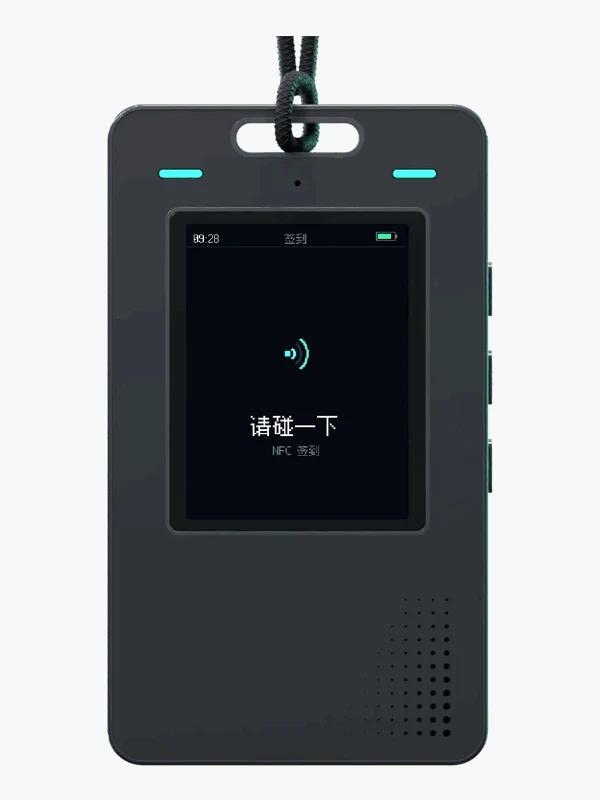
Staff read the badge with a handheld terminal, verify the guest list and show a check-in response. Issuing, replacement and verification rules are configured for the event.
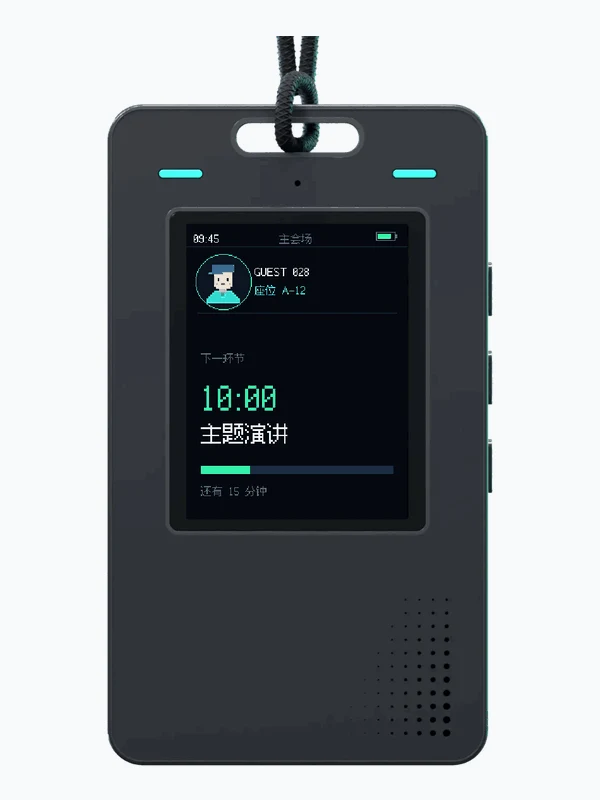
Display the guest's name, group, seat and agenda. The event control system sends concise session notices according to the agreed schedule.
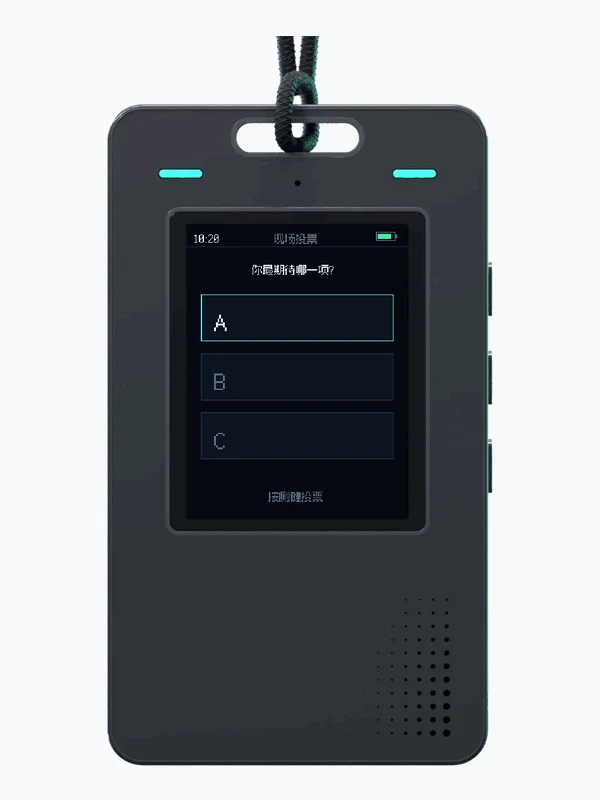
The host presents a question and guests answer with physical buttons. The control system collects responses for the big screen. Questions, timing and scoring are agreed in advance.
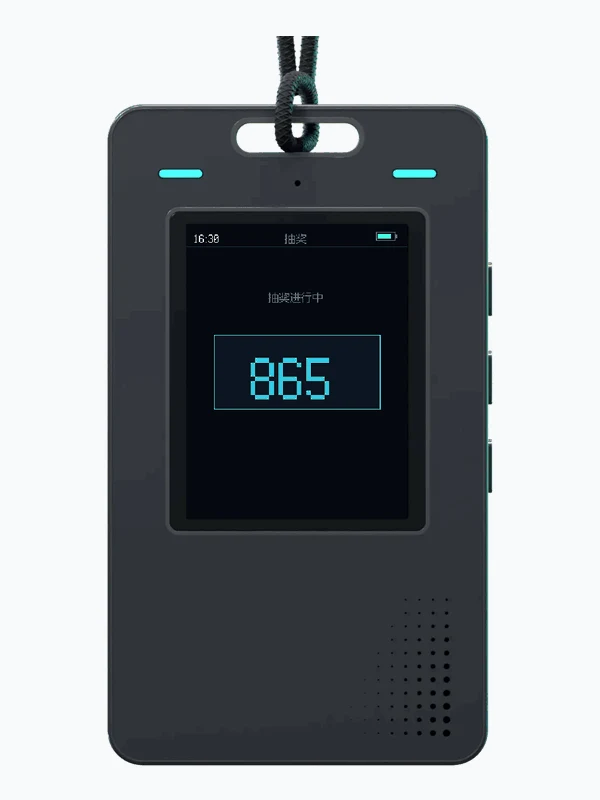
Run the draw using the agreed guest list and rules, and send a prompt to winning badges. Staff verify each guest at a terminal and record prize collection.
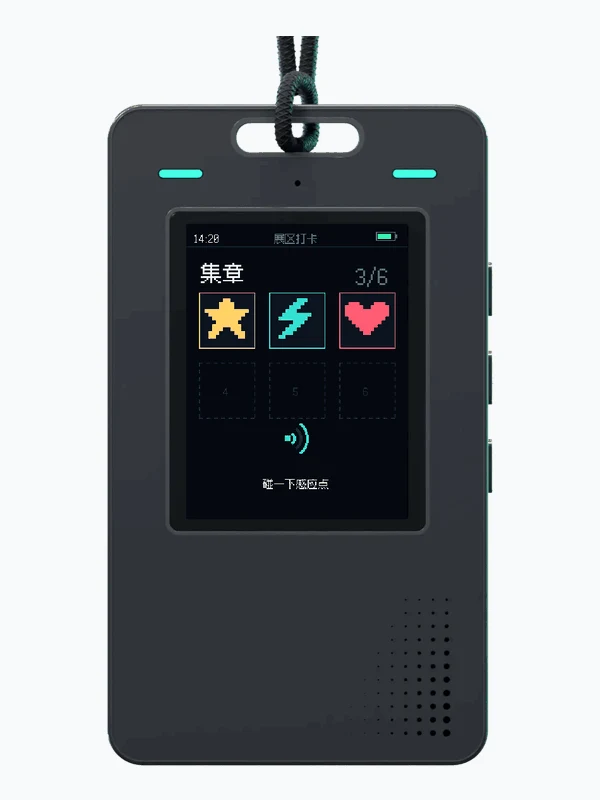
After each booth experience, an external terminal reads the badge to record a visit or stamp. Guests redeem rewards under the task rules. Checkpoints and terminals are planned around the visitor flow.
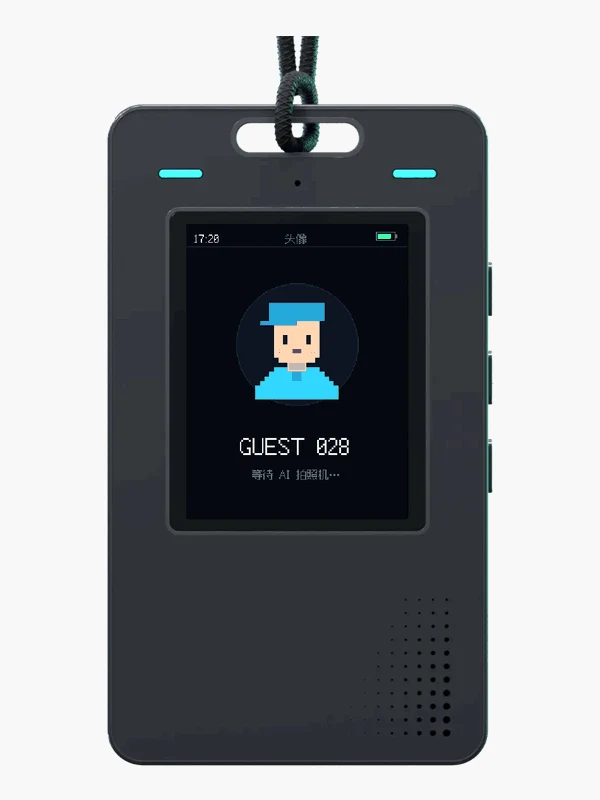
An AI photo experience can associate a generated portrait with the guest and update the matching badge. Photo equipment, transfer methods and integration testing are confirmed separately.
Demos start paused; press play to animate. AI portraits require additional photo equipment, identity mapping and transfer integration.
Guests use the badge, staff use terminals and the control system coordinates the experience. The setup follows attendance, entrances and interaction points.
Black or white design, colour display, physical buttons and NFC. Identity screens, branding and lanyards are confirmed for your event.
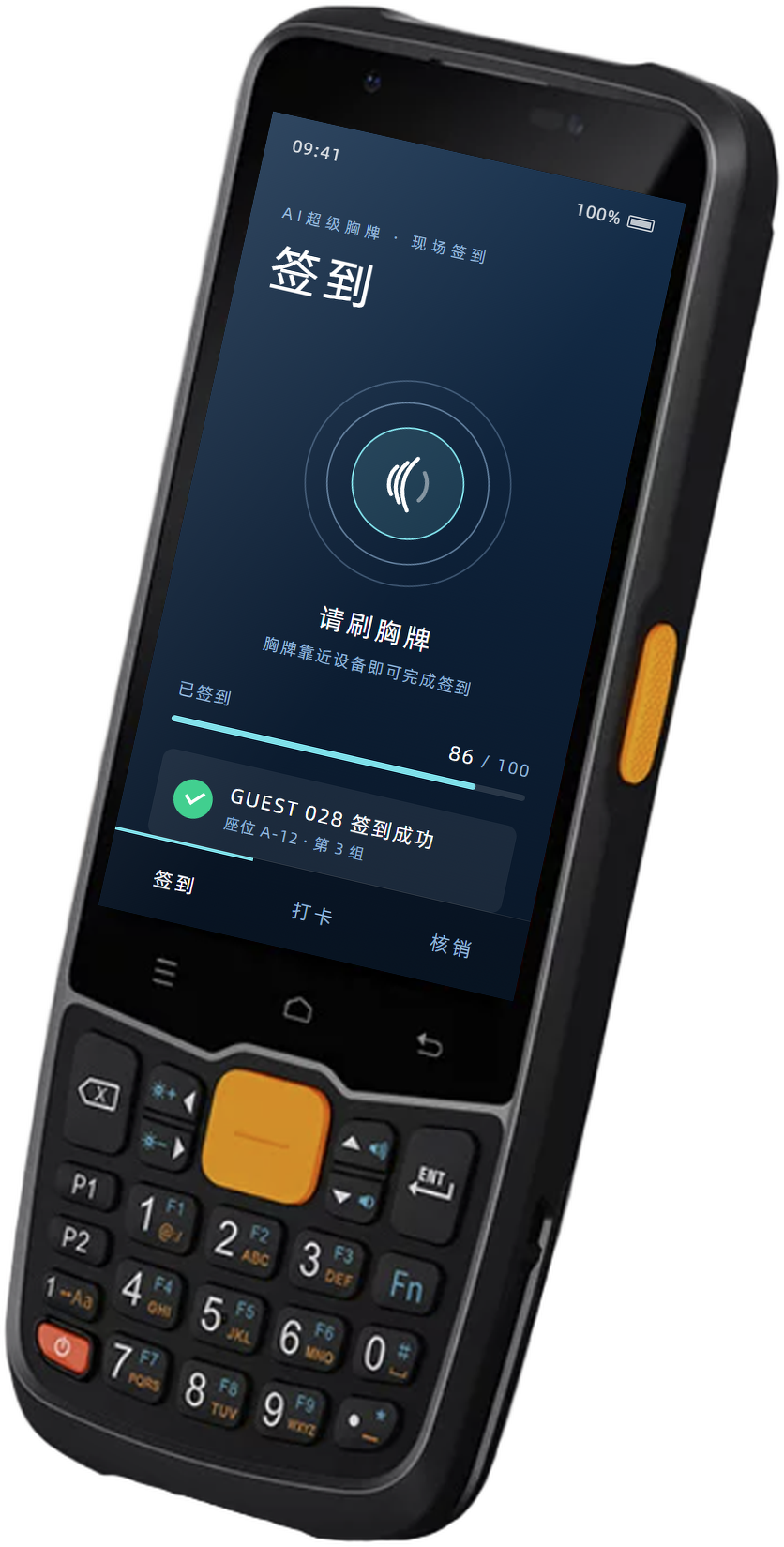
Staff read badges for check-in, checkpoints or prize verification. Quantities depend on entrances, booths and arrival patterns.
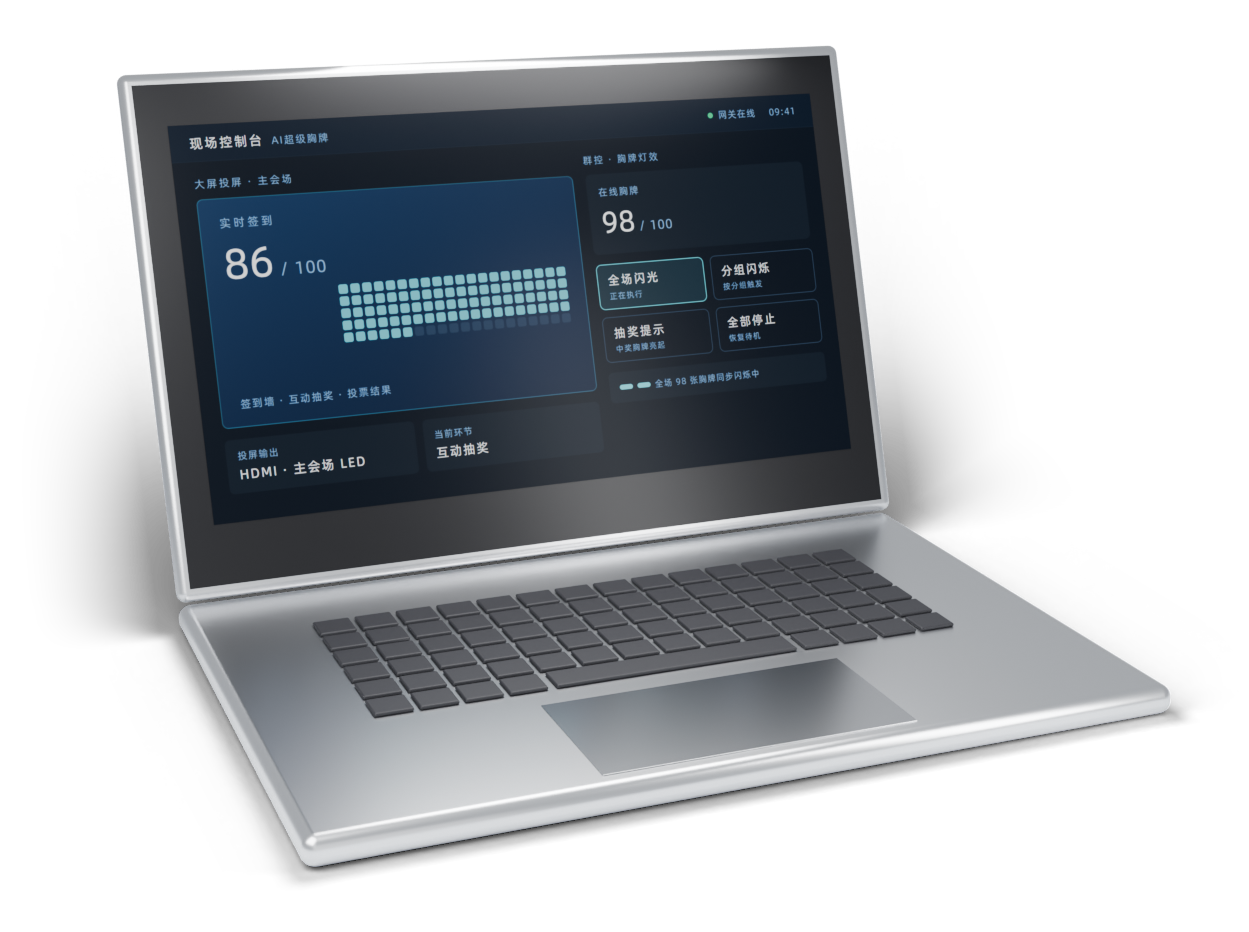
Configure guests, agendas and interactions, collect records and connect the event screen. Gateways, networking and screens are assessed for the venue.
Equipment and screen images illustrate the setup. Terminal models, network requirements and quantities follow the project specification.
Standard and Interactive describe planning scopes that can be combined for an event, rather than hardware models or validation levels.
Plan around arrival, information and main-hall participation.
Assess experience checkpoints and device integration.
Contact exchange, AI event Q&A and nearby-person discovery are possible extensions to discuss, outside the default delivery scope.
Book a demonstration to discuss purchase or rental. The product is in Beta; functionality, quantities, delivery dates and on-site services are confirmed after project assessment.
Basic NFC is read by an external terminal. Active badge-to-badge reading and contact exchange are extensions requiring separate assessment, outside the default scope.
Whole-device battery life, multiple gateways and large-scale interaction still require testing. Configuration and support are confirmed after validation against event duration, attendance, venue and interaction frequency.
Share the date, venue, attendance, schedule, guest fields, branding and interaction content. Responsibility for screens, networking, power, AI photo equipment and on-site operation is listed in the agreed configuration.
Tell us the date, venue, attendance and interactions you have in mind. Demonstrations, equipment, software and on-site services are scoped and quoted per project.